
Community Empowerment and Peace-Building Foundation: Empowering Women and Youth for Sustainable Change Initiatives From 2019 to 2021

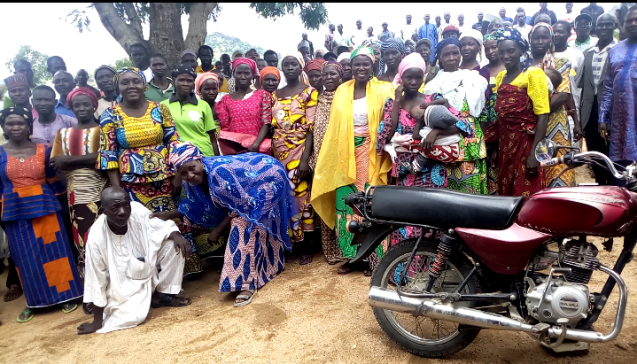
The Community Empowerment and Peace-Building Foundation for Women and Youth (CEPFoWY) has been actively working towards creating positive change in communities through various initiatives. This summary highlights their annual reports from 2019 to 2021, showcasing their efforts in awareness creation, healthcare advocacy, and community support.

In 2019, CEPFoWY organized an awareness creation workshop on gender-based violence (GBV) in Adamawa State, Nigeria. The workshop aimed to educate participants about gender concepts, the causes and effects of GBV, gender budgeting, and the importance of reporting GBV cases. The workshop successfully reached 127 individuals, including 105 males and 22 females. Despite challenges such as lack of funds and security concerns, CEPFoWY’s commitment to addressing GBV in these communities was evident.

Additionally, in collaboration with the Association of Civil Society Organizations on Malaria, Immunization, and Nutrition (ACOMIN), CEPFoWY conducted a project focused on malaria advocacy and accountability in Demsa communities. Through focus group discussions, client exit interviews, and key informant interviews, they reached 920 individuals, providing them with knowledge about combating malaria and accessing free malaria commodities. The project also addressed issues of medication affordability and supply adequacy.

In 2020, CEPFoWY continued its collaboration with VSF to implement a project in Maiha LGA communities. The project involved the distribution of 1,200 goats to 300 beneficiaries, improving their livelihoods. Despite challenges posed by the COVID-19 pandemic, CEPFoWY successfully supported the beneficiaries and conducted on-site supportive supervision.

Moreover, the ACOMIN project on malaria commodities advocacy and accountability continued in Demsa communities. Through focus group discussions, client exit interviews, and key informant interviews, CEPFoWY reached 920 individuals, ensuring their access to free malaria commodities and educating them on preventive measures.

In 2021, CEPFoWY’s collaboration with ACOMIN expanded its reach to more communities in Demsa LGA. Through focus group discussions, client exit interviews, and key informant interviews, they engaged 1,600 individuals, empowering them with knowledge about malaria prevention and ensuring accountability in the healthcare system.

Throughout the years, CEPFoWY faced challenges such as limited funds, security issues, hard-to-reach areas, poor network communication, and the impact of the COVID-19 pandemic. Despite these obstacles, their dedication to empowering communities remained unwavering.

The Community Empowerment and Peace-Building Foundation for Women and Youth (CEPFoWY) has made significant strides in empowering women and youth, addressing gender-based violence, improving healthcare access, and enhancing livelihoods. Their efforts have positively impacted communities, promoting sustainable change and fostering a brighter future. Through continued support and collaboration, CEPFoWY aims to create lasting social transformation and empower more individuals in the years to come.

Leave a comment

Your email address will not be published. Required fields are marked *

  • Technology Expands ICE’s Capacity for Abuse

    Click to expand Image US Immigration and Customs Enforcement (ICE) agents block protesters as cars exit Delaney Hall, which is being used as an ICE detention center, on May 27, 2026 in Newark, New Jersey. © 2026 Michael M. Santiago/Getty Images Representatives Delia Ramirez and Hank Johnnson, both members of US Congress, held a shadow hearing on US Immigration and Customs Enforcement’s (ICE) use of technology on July 15.Witnesses at the hearing detailed how the Department of Homeland Security (DHS) is building an increasingly vast network of interconnected data collection and processing systems. ICE reportedly relies on surveillance platforms, facial recognition tools, iris scanners, and spyware—all developed by private companies—to identify and track individuals and cross-reference with sensitive data held in federal, state, and commercial databases.Witnesses expressed concern that this data would then be used to profile and intimidate people in ways that chill protest, limit access to essential services, and undermine rights to privacy, nondiscrimination, due process, and free expression.Human Rights Watch documented surveillance of observers and protesters by ICE agents during immigration operations in Minnesota in December 2025 and January 2026. This research included cases of agents driving to observers’ own homes, raising serious concerns about intimidation and how ICE agents seemingly have access to observers’ addresses and other personal data. Journalists reported ICE agents appearing to scan Minnesota residents’ faces with Mobile Fortify, a DHS application that reportedly compares face and fingerprint scans against data held on government databases.ICE’s use of surveillance technology and their expanded access to personal data could increase the agency’s ability to identify and monitor specific individuals, risking further instances of wrongful targeting, racial profiling, and family separation across immigrant communities. It could also lead to privacy rights violations.Congress has dramatically expanded funding for immigration enforcement in recent weeks. These additional resources for ICE risk continued or expanded use of surveillance and profiling technology without safeguards or redress.As ICE increasingly uses technology for surveillance and profiling, Congress should play a critical role to ensure that there are protections and safeguards in place to try to limit further abuse.Congress should ensure rights-compliant use of technology by federal agencies, including by requiring that any use of surveillance technology comply with international human rights law and standards. Congress should also adopt a strong federal data protection law and update federal privacy law to regulate government agencies’ and private companies’ collection, analysis, and sharing of personal data.

About Us

Empowering women and youth skills development, preventing violence against women, promoting peace, and sharing important health information.

info@cepfowy.org
+2348064153159

Connect

Copyright © 2023. cepfowy